The Ultimate Guide to Transitioning Your Dog to New Foods Safely
You’ve done the research. You’ve found a new dog food that promises shinier coats, better energy, or perhaps addresses a pesky allergy. You are excited to upgrade your canine companion’s nutrition. You pour a full bowl of the new kibble, set it down, and watch them gobble it up.
Fast forward six hours. You are woken up by the distinct, dreaded sound of a dog about to vomit on your rug. Or perhaps the next morning’s walk is… messy.
Switching dog food is necessary at various stages of a pet’s life, but doing it incorrectly is the number one cause of diet-related digestive upset. A sudden change in diet can wreak havoc on your dog’s gastrointestinal (GI) tract.
This guide will explain why “slow and steady” is the only way to go, provide you with a foolproof transition schedule, and help you troubleshoot if things get bumpy along the way.
The Science: Why You Can’t Just Switch “Cold Turkey”
As humans, we can eat cereal for breakfast, a salad for lunch, and a spicy curry for dinner without issue. We expect our dogs to be the same, but their digestive systems are fundamentally different.
The Canine Microbiome
Your dog’s gut is hosting a massive party of billions of bacteria and microorganisms, collectively known as the microbiome. These good bacteria are specialized workers. Over time, they have adapted specifically to break down the exact ingredients, protein sources, and fiber ratios in your dog’s current food.
When you introduce a completely new food abruptly, the specialized bacteria that are currently employed aren’t equipped to handle it. The result? The food isn’t digested properly, leading to:
-
Gas and bloating
-
Loose stools or diarrhea
-
Vomiting
-
Refusal to eat
A gradual transition buys time for the microbiome to shift. It allows the old bacteria to phase out and new bacteria, suited to the new ingredients, to populate the gut.
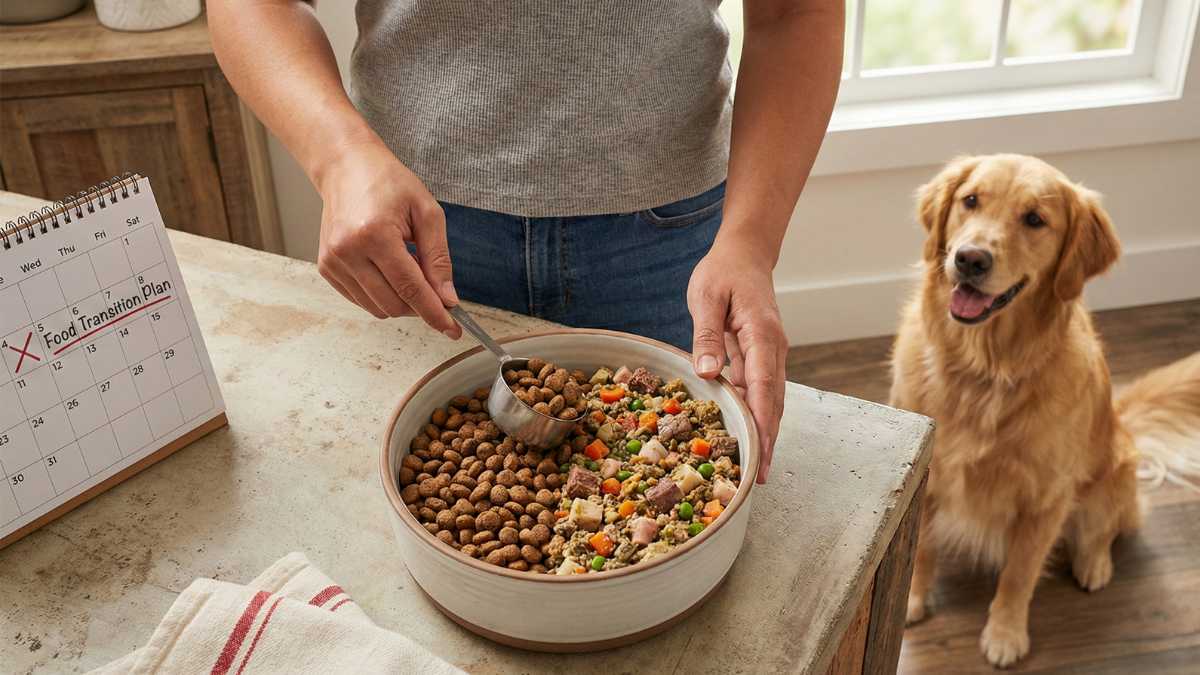
The Golden Rule: The 7-Day Transition Schedule
While every dog is different, the standard veterinary recommendation is a transition period over a minimum of 5 to 7 days.
Think of this schedule as a roadmap, not a strict rule. If your dog has a sensitive stomach, you may need to stretch this out to 10 or even 14 days.
The Step-by-Step Mix Plan
Never let your old food run out completely before buying the new food. You need enough of the old diet to last through the week of mixing.
Days 1 & 2: The Introduction
-
The Mix: 75% Old Food + 25% New Food.
-
The Goal: Introducing the new scent and taste without overwhelming the gut. Most dogs won’t even notice the change at this stage.
Days 3 & 4: The Halfway Point
-
The Mix: 50% Old Food + 50% New Food.
-
The Goal: The microbiome is now actively shifting. Monitor their stool closely during these days. It might be slightly softer than usual, which is normal, but it should not be liquid diarrhea.
Days 5 & 6: The Final Stretch
-
The Mix: 25% Old Food + 75% New Food.
-
The Goal: The new food is now the primary nutrition source. If your dog is still having firm, healthy poops, you are almost there.
Day 7: The Switch
-
The Mix: 100% New Food.
-
The Goal: Success!
Pro-Tip for Picky Eaters: If your dog is cleverly picking out the new kibble and spitting it on the floor, try adding a small amount of warm water or low-sodium bone broth to the mix. This blends the smells together, making it harder for them to discriminate between the old and new pieces.
Troubleshooting: What to Do When Things Go Wrong
Even with the best-laid plans, some digestive systems are stubborn.
Knowing Normal vs. Abnormal
Normal adjustment signs:
-
Slightly softer stool for a day or two.
-
A little extra gas.
-
Hesitation to eat the mixed food initially.
Red Flags (Stop the transition):
-
Liquid, uncontrollable diarrhea.
-
Vomiting more than once.
-
Extreme lethargy.
-
Complete refusal to eat for more than 24 hours.
The “Press Pause” Method
If you hit Day 3 (50/50 mix) and your dog develops significant loose stool:
-
Do NOT keep pushing forward.
-
Step back one level. Go back to the Days 1 & 2 mix (75% old / 25% new).
-
Hold there. Stay at that previous level for 2–3 extra days until their stool firms up again.
-
Restart slowly. Once stabilized, try moving to the 50/50 mix again.
If the upset is severe (vomiting or liquid diarrhea), stop the new food entirely, feed a bland diet (boiled chicken and rice) for 24 hours until their tummy settles, and consult your vet before trying again.
Special Scenarios and Considerations
The 7-day rule applies to most standard kibble-to-kibble switches, but some situations require extra care.
1. Switching Puppies to Adult Food
Puppies usually transition to adult food around 10–12 months (later for giant breeds). Because growing bodies are sensitive to nutrient shifts, a 10-day transition is often safer for puppies to ensure continued growth without interruption.
2. Switching from Kibble to Fresh, Raw, or Freeze-Dried
This is the biggest digestive leap a dog can make. Kibble is highly processed and takes longer to digest; raw or fresh food is highly bioavailable and digests quickly.
When making this switch, the gut pH needs to change significantly.
-
Extend the transition: Take at least 10 to 14 days.
-
Watch closely: You may see detoxification symptoms, such as increased mucus in the stool initially.
-
Use digestive aids: Consider adding a canine probiotic or digestive enzyme supplement during this specific transition to help the gut cope with the richer food.
3. The Known Sensitive Stomach
If you already know your dog has a “cast-iron stomach,” you might get away with a 5-day switch. If you know your dog gets the runs just looking at a new treat, plan for a 14-day transition. Move the percentages in smaller increments (e.g., 10% new for three days, then 20% new, etc.).
Final Thoughts: Patience Pays Off
Cleaning up diarrhea is much harder than taking an extra three days to mix dog food.
Transitioning diet safely is an investment in your dog’s long-term health. By respecting their biology and giving their gut microbiome the time it needs to adapt, you ensure that the new, healthier food you’ve chosen actually has the chance to do its job. Listen to your dog’s body, take it slow, and happy feeding!