
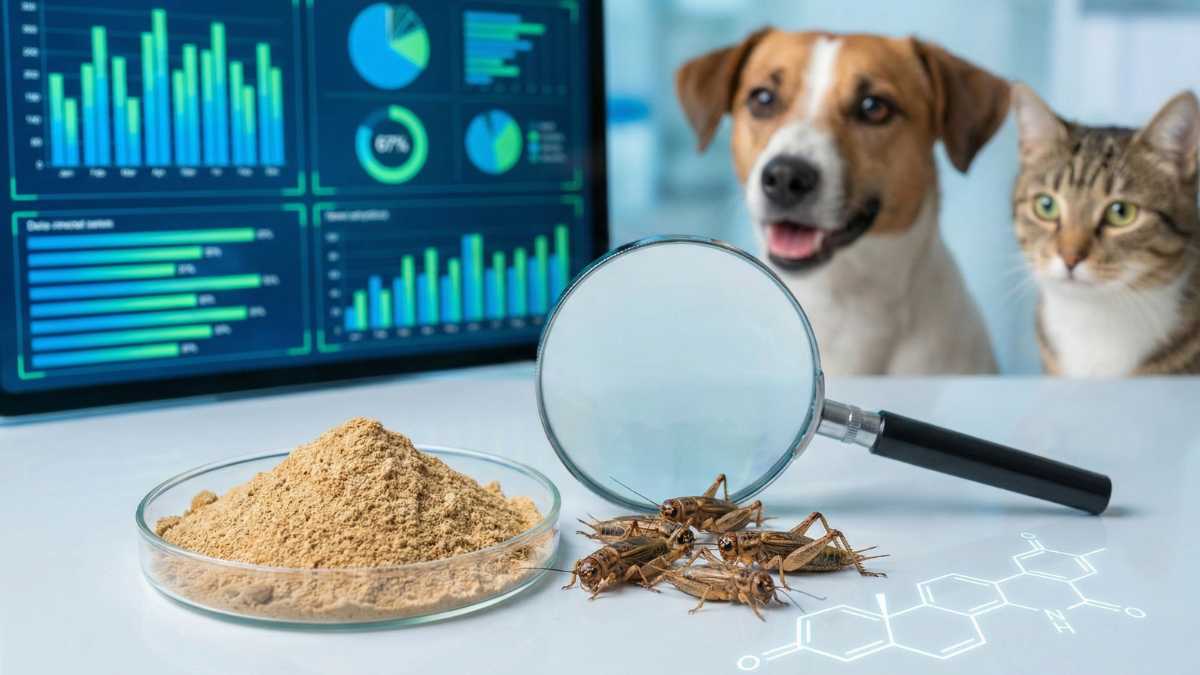
Beyond the “Ick” Factor: The Hard Science Behind Insect Protein for Pets
Ten years ago, the idea of feeding your dog or cat a bowl of kibble made from crickets or fly larvae would have sounded like a dystopian joke. Today, it is one of the fastest-growing, most heavily researched sectors in pet nutrition.
But for the average pet owner, overcoming the initial “yuck factor” is a hurdle. We are conditioned to view insects as pests, not sustenance.
To understand why veterinarians, animal nutritionists, and environmental scientists are embracing insect protein, we have to move past our cultural biases and look at the hard data. The science is clear: insects are not just a “backup plan” for when meat runs out; they are a nutritional powerhouse that often rivals, and sometimes exceeds, traditional livestock.
Here is a detailed breakdown of the science behind insect protein for pets.
1. The Nutritional Profile: A Complete Package
When formulating pet food, nutritionists don’t look at “ingredients” (like chicken or beef); they look at “nutrients” (amino acids, fatty acids, vitamins). The body doesn’t care where the amino acid comes from, as long as it’s there and usable.
Insects, specifically the primary species used in pet food—Black Soldier Fly Larvae (BSFL) and Acheta domesticus (House Crickets)—have spectacular nutrient profiles.
The Protein and Amino Acid Checkbox
Dogs require ten essential amino acids that their bodies cannot produce on their own. If a protein source is missing even one, it is considered “incomplete.”
- The Science: Studies have repeatedly confirmed that cricket and BSFL meals are complete proteins, containing all essential amino acids in quantities that meet or exceed AAFCO (Association of American Feed Control Officials) standards for adult maintenance.
- Taurine: Crucial for heart health in both dogs and cats, taurine is naturally present in significant quantities in many insects, particularly crickets, reducing the need for synthetic supplementation.
The Healthy Fat Ratios
Insects are not just lean protein; they are rich in varied fats crucial for skin, coat, and brain health.
-
The Science: Insects generally have a highly favorable ratio of Omega-6 to Omega-3 fatty acids.
-
BSFL’s Secret Weapon: Black Soldier Fly Larvae are unique because they are incredibly rich in Lauric Acid (also found in coconut oil). Lauric acid is a medium-chain triglyceride (MCT) known for its antimicrobial properties and ability to support gut health and cognitive function in aging pets.
Micronutrient Density
Insects are often eaten whole (exoskeleton and all), which means they provide a dense source of micronutrients that muscle meat alone often lacks. They are particularly high in B vitamins (especially B12), iron, zinc, and calcium.
2. Digestibility and Bioavailability: Can they actually use it?
A food can have high protein on the label, but if a dog’s digestive tract can’t break it down, it’s useless (like old leather boots—high protein, zero digestibility).
This is where the science gets interesting, and where early skepticism lay. Insects have exoskeletons made of chitin (pronounced ky-tin). Critics argued chitin would be indigestible for dogs.
The Chitin Paradox
It turns out, chitin is a double-edged sword that, when managed correctly, becomes a benefit.
-
The Indigestible Part: It is true that dogs cannot fully digest large amounts of raw chitin.
-
The Solution: Pet food manufacturers use processed insect meals. The grinding and gentle cooking processes break down the exoskeleton structure, making the protein inside highly accessible.
-
The Prebiotic Benefit: The remaining small amounts of chitin act as an insoluble fiber. Science now recognizes this as a potent prebiotic. It feeds the beneficial bacteria in the dog’s gut microbiome, promoting healthier stool consistency and better overall gut health.
The Verdict on Digestibility
Multiple university studies comparing insect meal to traditional fish meal and poultry meal in canine diets have found no significant difference in digestibility. Dogs absorb insect protein just as effectively as they absorb chicken.
3. The Medical Science: The Hypoallergenic Solution
Currently, the primary medical driver for veterinarians recommending insect-based diets is the rise in food sensitivities.
The most common allergens for dogs are beef, dairy, and chicken. These are proteins their immune systems encounter daily. Over time, a dog’s immune system can mistake these common protein structures for invaders, triggering itchy skin, ear infections, and GI upset.
The “Novel Protein” Mechanism
Insects offer a simple, elegant solution based on immunology.
Because virtually no dogs have been raised on a cricket-based diet, their immune systems have never encountered that specific protein structure. It is “novel.” The immune system does not recognize it as a threat, allowing the dog to eat the food without triggering an allergic response.
For dogs suffering from chronic allergies to standard meats, insect protein is often a “miracle cure,” not because of magic, but because of simple immune evasion.
4. The Planetary Science: The Sustainability Metrics
While nutritional science is vital for the pet, environmental science is vital for the planet. The pet food industry consumes a massive amount of global meat resources. As the human population grows, competition for traditional protein will intensify.
The data comparing insects to traditional livestock (“mini-livestock” vs. “mega-livestock”) is staggering.
| Metric | Beef (approximate) | Crickets/Insects (approximate) | The Science |
| Feed Conversion | Requires ~25kg of feed to create 1kg of beef. | Requires ~2kg of feed to create 1kg of cricket protein. | Insects are cold-blooded; they don’t waste energy heating their bodies, making them incredibly efficient biomass converters. |
| Water Use | ~15,000 liters per kg of beef. | ~4 liters per kg of cricket protein. | Insects get most hydration from their food and require no irrigation for grazing land. |
| Land Use | Massive grazing requirements. | Minimal. Can be farmed vertically in warehouses. | Insect farming allows for high-density protein production near urban centers, reducing transport costs. |
| Greenhouse Gas | High methane and CO2 emissions. | Negligible greenhouse gas emissions. | Insects do not produce methane the way ruminant animals (cows, sheep) do. |
5. Safety and Regulation: “Bait Shop” vs. Food Grade
A common scientific misconception among pet owners is that insect protein carries parasites or heavy metals.
This fear stems from confusing wild insects or bait-shop insects with agricultural insects.
-
The Danger of Wild Bugs: Insects caught outside can contain pesticides, parasites (like horsehair worms), and bioaccumulated heavy metals from polluted soil. You should never let your pet eat wild bugs regularly.
-
The Safety of Farmed Insects: The insects used in pet food are raised in indoor, climate-controlled, hygienic facilities specifically for human or pet consumption. Their feed is controlled (often pre-consumer food waste, contributing to the circular economy), and they are tested rigorously.
In the USA, insect proteins utilized in pet food must meet the safety standards of the FDA and are increasingly gaining formal definitions by AAFCO, ensuring they meet the same safety criteria as chicken or beef meal.
Conclusion
The adoption of insect protein in pet food is not a fad based on marketing; it is a shift based on necessities driven by nutritional science, immunology, and environmental data.
While the “ick factor” is a very real human psychological barrier, the biology of our pets tells a different story. Dogs and cats are evolutionary opportunists. Their bodies are designed to recognize nutritious fats and complete amino acid profiles, regardless of whether the package has four legs or six. The science suggests that in looking for the future of pet food, we should be looking down at the smallest creatures among us.